
Overview
In 1994, the Commission approved a plan by Chevron U.S.A. Inc. to conduct California’s first offshore oil platform decommissioning project, which involved removing four platforms in the Santa Barbara Channel (Hazel, Heidi, Hilda, and Hope, known as the “4H Platforms”). Chevron removed the platforms and completed this project in 1997. However, the decommissioning plan required Chevron to ensure the former platform sites did not conflict with and harm commercial fishing trawlers’ ability to use those former platform sites. It soon appeared that fishing nets snagged on remnant “Shell Mounds” (see below and Figure 2), impairing trawl fishing. Between 1997 and 2013, the Commission worked with stakeholders and other agencies to develop approaches to eliminate Shell Mound conflicts with fisheries and provide a benefit to commercial trawlers. In 2013, Chevron reached a settlement with trawlers to compensate them for past and future losses, effectively resolving potential conflict. To close this chapter, the Commission and Chevron negotiated Lease Termination Agreements (LTAs) to end the last vestiges of oil and gas production off Santa Barbara County and to provide long-term monitoring and protection to the people of the State of California. (See April 2, 2025, Item 50, for more background.)
Frequently Asked Questions
What are Shell Mounds?
The Shell Mounds are accumulations of sediment and biological material that entomb contaminated drill cuttings — rock and sediment fragments produced during offshore oil and gas drilling and historically discharged to the seafloor with drilling fluids — and drilling muds from before the 1970s. Up until 1970, well drilling at the 4H Platforms produced oil- and water-based drill muds that were discharged, accumulating on the seafloor. These muds formed piles beneath each platform. Over time, encrusting invertebrates like mussels, barnacles, and scallops fell from the legs of each platform, creating a solid “shell hash” layer, 1–20 feet thick, over the mud. Additionally, sand and other sediments continued to accumulate, entombing the cuttings. Today, each Shell Mound rises 25-28 feet above the ocean floor, has a diameter between 200-250 feet, and covers approximately 1 acre each.
What are the Lease Termination Agreements (LTAs)?
LTAs are contractual agreements that provide assurances and protection to the State and region. The LTAs provide that, in exchange for the Commission accepting Chevron’s surrender of oil and gas leases 1824.1, 3150.1, and 7911.1 and acknowledging the completion of its lease obligations, Chevron will agree to monitor the Shell Mounds and respond
to potential risks to those structures caused by a seismic event for 30 years. The terms of the LTAs and the monitoring conditions are informed by the results of the scientifically peer-reviewed assessment.
Do the LTAs bind the actions of other agencies?
No, the LTAs do not bind actions by other agencies. The LTAs resolve issues related to the oil and gas leases previously issued by the Commission and are not a settlement on behalf of the entire State of California. The authorities of other agencies, including the California Coastal Commission, Water Boards, and CalGEM, are unaffected by the LTAs.
Is the Commission required to enter into a lease termination agreement?
No, however, under the terms of the existing oil and gas leases Chevron can quitclaim (i.e., surrender) its leases at any time. The LTAs are a negotiated resolution to provide certainty as to remaining obligations under Chevron’s leases. Under the LTAs the State retains certain assurances as to monitoring and response, benefits that would not be assured absent these agreements.
What are the practical effects of the Commission entering into the LTAs?
Executing the LTAs will terminate the last oil and gas leases in state waters off Santa Barbara County and close the door on any overreach from the federal Outer Continental Shelf. The LTAs will permanently extinguish the last oil production rights in state waters, ending a 130-year era of offshore oil production that began with the development of the first wells off Summerland Beach in the late 19th century. Terminating these oil production leases will also immediately close any possibility by a federal administration to develop those resources from platforms Houchin and Hogan in adjacent federal waters under plans previously developed. (See October 28, 1996, Item 55.)
Why are the Shell Mounds being discussed over 30 years later?
After decommissioning in 1997, the Shell Mounds were found to snag commercial trawl fishing nets impacting that community—eliminating that conflict was an ongoing goal of the state. After 1997, the Commission directed Chevron to mitigate risk, hold public hearings, and collaborate with stakeholders to find permanent solutions to the fisheries conflict. In 2013, Chevron and the commercial trawl fishers reached a settlement that resolved the conflict between commercial trawlers and the Shell Mounds—the last unmet condition of Chevron’s leases. Execution of the LTAs will terminate the leases underlying the mounds in exchange for long-term monitoring.
Why isn’t the Commission requiring the removal of the Shell Mounds as part of the LTAs?
The decision to leave the Shell Mounds in place was made by the Commission when the decommissioning plan was approved in 1994. The Commission approved a project plan in 1994 to allow the Shell Mounds to remain in place. That approval explicitly allowed the Shell Mounds to remain and return to the State as sovereign lands. There was no contemplation of their removal. Rather, the Commission’s sole concern was in the context of realizing a potential benefit from the removal of the platforms which would address the decades-old fisheries conflict when the platforms were still in place. The trawling/fisheries conflict was resolved in 2013, as was any requirement under the Commission’s leases to alter or modify the configuration of the Shell Mounds. The Commission is unable to revisit its previous determinations, which, in 1994, included accepting the Shell Mounds as part of the sovereign lands on which they reside.
What risks are posed by leaving the Shell Mounds in place?
An extensive analysis by the Commission was conducted that showed the risks are limited, and the sole “moderate” risk is addressed in the LTAs. In April 2025 (Item 50), the Commission released an analysis of impacts to public trust resources and values (the Assessment), an Ocean Science Trust peer-reviewed report synthesizing 23 studies performed at the Shell Mounds over 40 years. The Assessment found the Shell Mounds to have remained physically stable over the decades, with a likelihood that any contaminants within the mounds will remain sequestered. The only “moderate” risk identified is from a nearby seismic event, which could destabilize the mound structure. The LTAs were negotiated to address this potential risk.
What steps are proposed in the LTAs to ensure the Shell Mounds pose no risks?
The Commission, informed by the risks identified in the Assessment, negotiated a commitment by Chevron to a long-term seismic monitoring and response program. Under the proposed LTAs, Chevron will monitor the Shell Mounds for seismic events occurring over the next 30 years. In the event of a specific trigger, Chevron will perform multiple investigative surveys to detect contaminant release. If the Shell Mounds are releasing contaminants, Chevron will develop and undertake, with regulatory approvals, a Shell Mound Contaminant Release Containment and Cleanup Plan to contain and stop contaminant releases.
When will the Commission consider the LTAs?
The Commission is bringing the LTAs up for consideration during its meeting on February 9, 2026, in Sacramento. Comments are welcome, and virtual participation is available. Please visit www.slc.ca.gov/meetings/#mtgpro for more information about how to sign up to speak at the meeting or for the webcast link to watch the meeting.
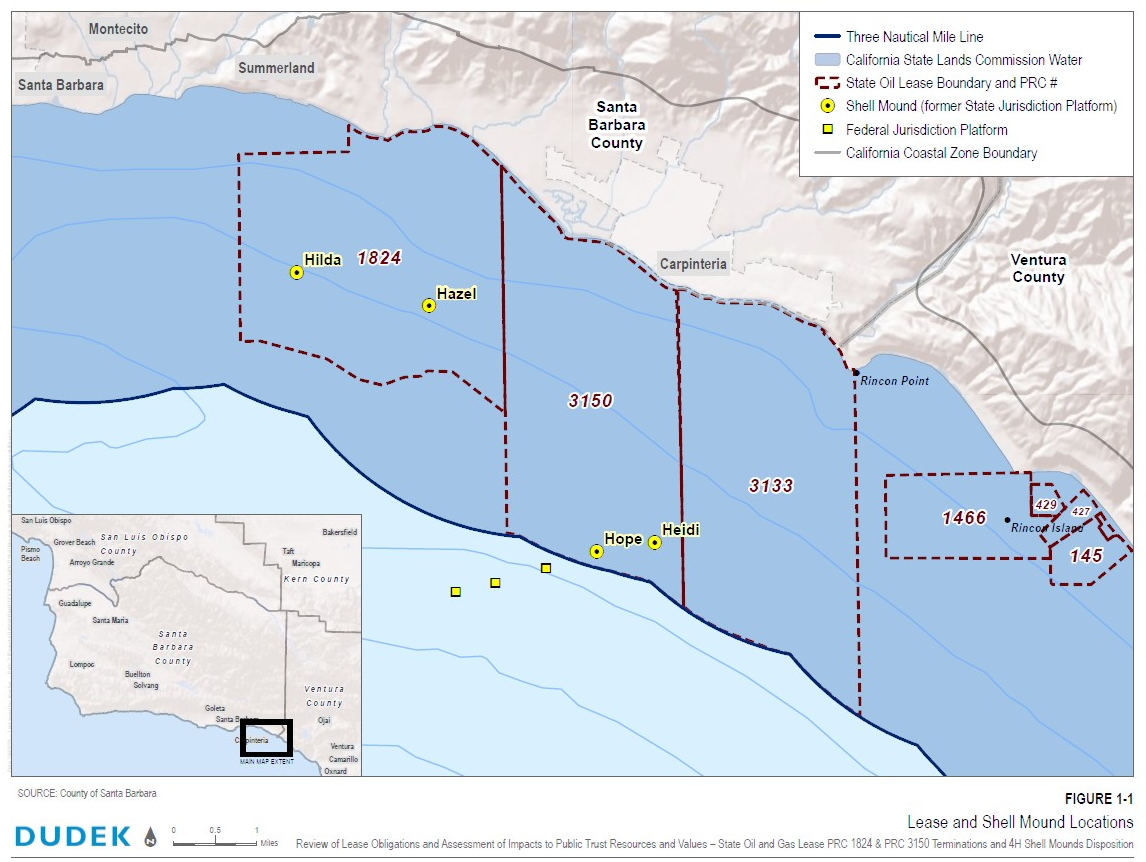
Figure 1. Lease and Shell Mound Locations
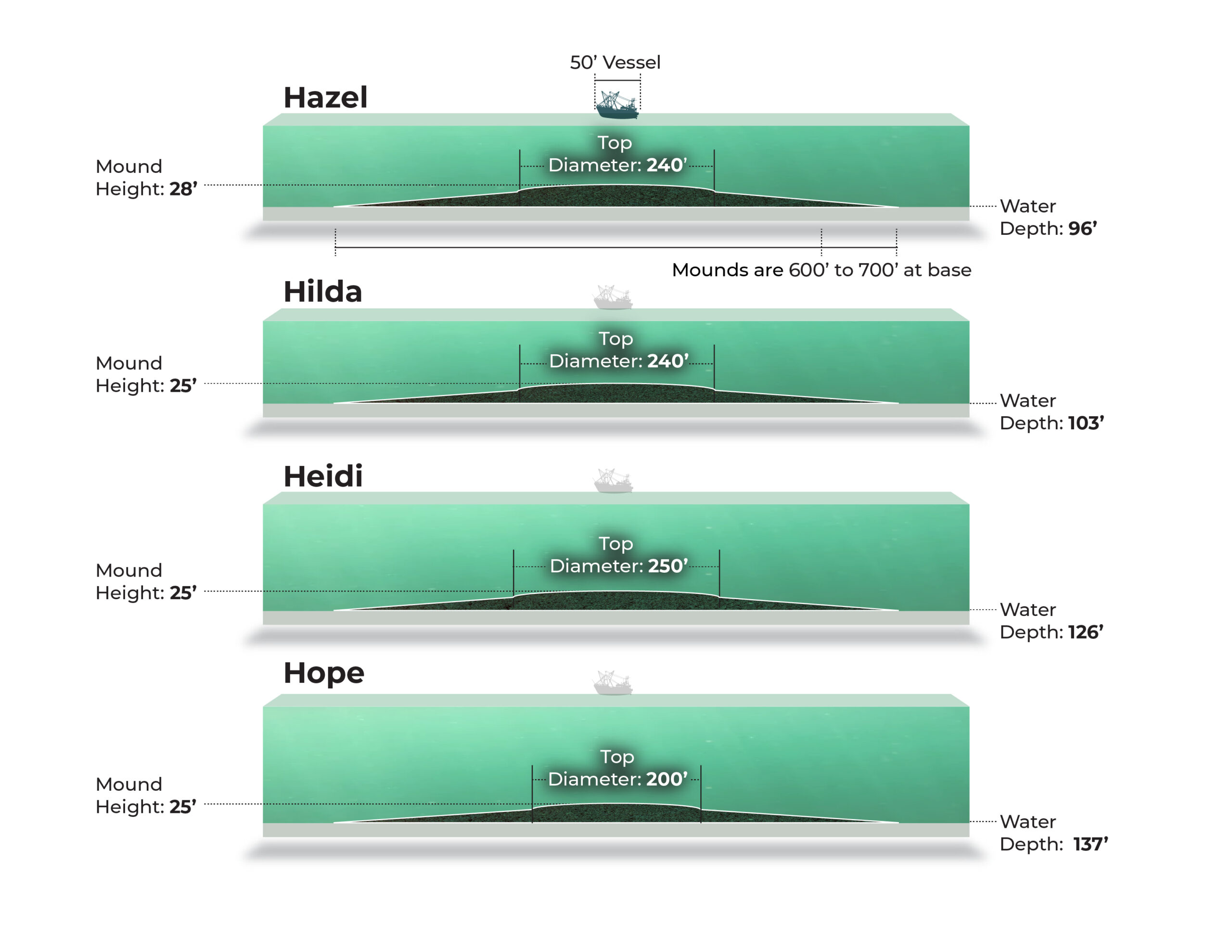
Figure 2. Cross-sectional diagrams of the 4H shell mounds, showing the height of the mounds relative to their base diameters. A 50-foot-long fishing vessel is shown for scale.