
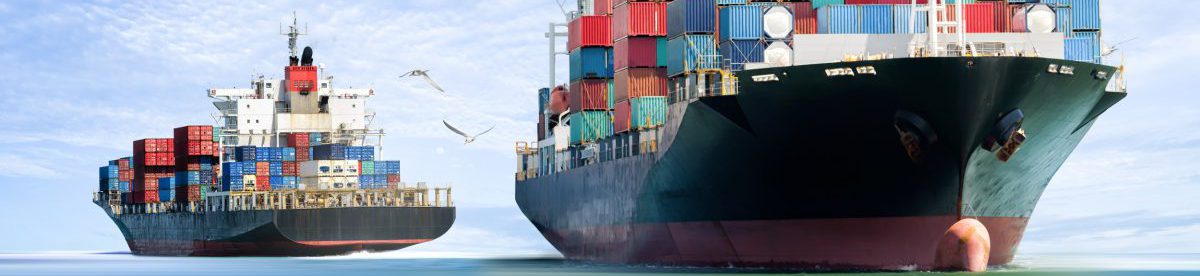
The Marine Invasive Species Program is a world-leading program that reduces the risk of aquatic nonindigenous species introduction into California’s waters. We strive to accomplish this goal through:
- The development, implementation, and enforcement of innovative vessel biofouling and vessel ballast water management strategies and policies.
- Use of the best available technology and peer-reviewed science.
- Partnerships with stakeholders to improve awareness of invasive species issues and assess program efficacy.
The Marine Invasive Species Program works to prevent new species introductions by implementing vessel ballast water and biofouling management requirements that are authorized by the Marine Invasive Species Act. These regulations apply to vessels that are 300 gross registered tons or more and capable of carrying ballast water.
The Marine Invasive Species Program is funded through a $1,000 fee on qualifying vessel voyage arrivals. The fee is collected by the California Department of Tax and Fee Administration.
Receive Updates
Join our e-list to receive the latest news and information on regulations and upcoming customer service meetings.
Contacts
Program Manager
Chris Scianni
562.499.6390
MISP-EPM.Public@slc.ca.gov
Ballast Water and Biofouling
Lina Ceballos Osuna
916.574.1864
Raya Nedelcheva
916.574.2568
Jonathan Thompson
916.574.2276
Recordkeeping/Administration
Jackie Mackay
562.499.6312
Program Updates
Amendments to Article 4.5 of Chapter 1, Division 3 of Title 2 of the California Code of Regulations
The California State Lands Commission has amended the Marine Invasive Species Control...
Amendments to Article 4.7 of Chapter 1, Division 3 of Title 2 of the California Code of Regulations
The California State Lands Commission has amended the Performance Standards and...
Amendments to Article 4.9 of Chapter 1, Division 3 of Title 2 of the California Code of Regulations – Marine Invasive Species Act Enforcement and Hearing Process
The California State Lands Commission has amended the Marine Invasive Species Act...
Amendments to Article 4.7 of Chapter 1, Division 3, Title 2 of the California Code of Regulations – Readoption of Emergency Regulation
The California State Lands Commission is implementing an emergency rule that amends Article 4.7 of...
Readoption of Emergency Amendments to Article 4.7
The California State Lands Commission proposes to readopt emergency regulations that...
2026 Marine Invasive Species Program Updates
Annual letter to shipping agents and interested parties to provide information about new...
Program History
The Program began in 1999 with the passage of California’s Ballast Water Management for Control of Nonindigenous Species Act, which addressed the threat of species introductions from vessels arriving at California’s ports. In 2003, the Marine Invasive Species Act was passed, reauthorizing and expanding the 1999 Act. Subsequent amendments to the Act and additional legislation further expanded the Program’s scope.
Why is there concern about nonindigenous species
Nonindigenous species are organisms that pose significant threats to human health, the economy, and the environment. Nonindigenous species are intentionally or unintentionally transported through human activities to new habitats such as California’s marine, estuarine, and freshwater environments. Once a nonindigenous species is moved, becomes established in a new in geographic location, and causes impacts, it is considered an invasive species.
In coastal aquatic habitats, commercial shipping is the major pathway for NIS introductions. Commercial ships transport organisms through ballast water and vessel biofouling. Prevention of species introductions through vector management is considered the most effective way to address invasive species because once established, attempts to eradicate invasive are often unsuccessful and costly.
Ballast Water
Ballast water is used by ships to maintain stability at sea. As ships move throughout the world, they can discharge ballast water and introduce any nonindigenous species that were in the ballast water source. It is estimated that ballast water moves more than 7,000 species around the world on a daily basis (Carlton 1999) with a single vessel ballast water discharge having the potential to release over 21.2 million individual planktonic animals (Minton et al. 2005). Vessels may load, discharge, or redistribute ballast water during cargo loading and unloading, as they encounter rough seas, or as they transit through shallow coastal waterways.
Vessel Biofouling
Vessel biofouling is an organism or a community of organisms that are attached to or associated with a vessel’s hard surfaces that are wet or underwater. Vessel biofouling includes attached organisms such as barnacles, algae, and mussels, and also includes organisms that associate with the attached organisms such as worms, crabs, and amphipods (small shrimp-like animals).Vessels can carry biofouling as they move throughout the world. As vessels move, biofouling organisms can spawn (reproduce) or drop off a vessel resulting in the introduction of NIS. Vessel biofouling is considered one of the most significant vectors for marine nonindigenous species introductions in several regions, including Australia, North America, Hawaii, the North Sea, and California (Ruiz et al. 2000a, 2011, Eldredge and Carlton 2002, Gollasch 2002).
Other Marine Invasive Species Program agencies
California Department of Tax and Fee Administration (Fee Collection)
California Department of Fish and Wildlife, Office of Spill Prevention and Response