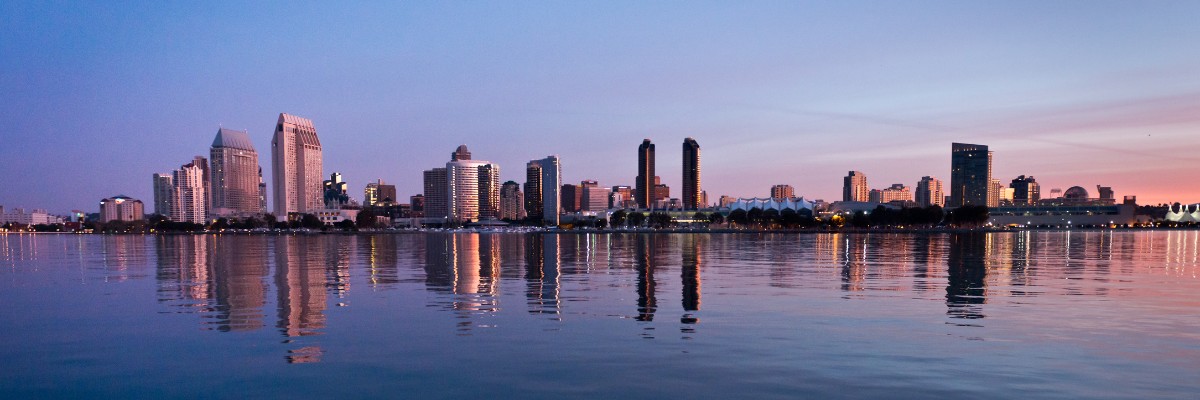
State Controller, Malia M. Cohen chaired the Commission’s August meeting in San Diego, where the Port of San Diego Executive Officer welcomed the Commission. The staff reports informing the Commission’s actions and the Executive Officer’s Report contain additional information and updates on the federal Coastal Zone Management Act review, the development of a new strategic plan, the Tijuana River transboundary pollution crisis, and much more.
Summary
- Authorized 32 leases for the use of public lands and resources.
- Authorized three rent revisions.
- Authorized two lease assignments and one lease amendments.
- Authorized two Geological Survey Permits and three offshore Geophysical Survey Permits.
- Approved a memorandum of understanding between the Commission, the Department of Water Resources, and the Central Valley Flood Protection Board for flood control projects on state land.
Restoration of the Clear Lake watershed through shared stewardship and co-management
Clear Lake is one of California’s oldest freshwater lakes. The Commission authorized staff to enter into a memorandum of understanding to restore the Clear Lake watershed through shared stewardship of its lands, waters, and native species. The partnership is California’s first watershed co-management agreement since the Tribal Stewardship Policy was launched last year. Clear Lake and its watershed sit at the heart of the ancestral homelands of Pomo and Lake Miwok peoples, whose generations of leadership and Traditional Ecological Knowledge have stewarded Clear Lake since time immemorial. Since the disruption of this critical tribal stewardship, the Clear Lake watershed has experienced declining water quality, degraded wetlands, habitat loss, and the decline of native species, including the threatened Chi (Ṣátti), also known as the Clear Lake hitch. The landmark agreement is intended to improve water quality, restore habitat, strengthen native fish populations, and support healthier ecosystems for future generations.
Marine Invasive Species Prevention
The Commission’s Marine Invasive Species Program recently published two influential peer-reviewed scientific research articles in collaboration with colleagues within California and throughout the globe. Senior Environmental Scientist Chris Scianni briefed the Commission about the publications. The first paper, California’s Marine Invasive Species Program: 25 years of comprehensive pathway management, was published in the journal Management of Biological Invasions. This paper focuses on the first 25 years of the Commission’s program and the shipping-related invasive species pressures on California waters. The second paper, Closure of the Strait of Hormuz may trigger a bioinvasion super spreader event, was published in the journal Biological Invasions through a collaboration between our scientists and 23 marine scientists across the globe. This paper highlights the likely unprecedented accumulation of species on the hulls of roughly 1,500 ships idled for months in the warm, biologically productive Persian Gulf. This paper describes the potential for these fouled vessels to create a super-spreader event once the Strait of Hormuz opens and the vessels reenter service.
Clean energy transition and a Retrospective on a Transformative Decade
Over the past decade, staff have navigated unprecedented challenges and celebrated milestones in offshore oil and gas decommissioning, including a landmark 72 million dollar settlement from Plains All American Pipeline and removal of the last two shorezone oil piers in California. Staff summarized major challenges, actions, and achievements over the past decade to terminate offshore oil and gas leases, and visible milestones and institutional changes that will endure to protect the state after the remaining decommissioning work is complete.
Climate Adaptation and Public Access
The Commission approved a lease to construct, use, and maintain erosion control measures along the Sacramento River in West Sacramento to reduce flood risk and facilitate climate adaptation. The Commission approved a lease to the City of Sacramento and a sublease to the Drowning Accident Rescue Team, a nonprofit, volunteer organization, for a facility on the Sacramento River that provides public safety and recreational public access. Additionally, many leases approved during the August meeting facilitate recreational access throughout Lake Tahoe, the Napa River, and Tomales Bay through installations of mooring buoys, piers, docks, and decks.
School Land Sale
The Commission authorized the sale of 326 acres of school land in San Benito County to a private individual for $1 million. The unleased land is bordered on all sides by privately owned land. The revenue will be deposited into the School Land Bank Fund.
Future Meetings and Ways to Stay Informed
The next public meeting is on October 21 in Sacramento, with Zoom participation available. You can sign up to receive updates about future meetings or follow us on Instagram, Bluesky, X, or YouTube. You can watch a webcast of past meetings on Cal-Span.